SEO, GEO, AEO and AIO in the Gulf: A Practical Strategy for Search and AI Visibility
An executive guide for companies targeting Saudi Arabia, the UAE, Kuwait, Qatar, Bahrain and Oman. Learn how to combine SEO, GEO, AEO and AIO into one measurable system that earns discovery, trust and qualified demand.
Companies selling into Saudi Arabia, the UAE, Kuwait, Qatar, Bahrain, and Oman no longer compete on a single search results page. A buyer may discover a problem through Google, ask an AI assistant to explain the available options, compare providers through an AI-generated answer, visit two service pages, search the names of the consultants involved, and return days later through a branded query. Search is still central to that journey, but the journey now crosses traditional rankings, answer engines, generative interfaces, maps, review platforms, and professional networks.
That change has produced a crowded vocabulary: search engine optimization (SEO), answer engine optimization (AEO), generative engine optimization (GEO), and artificial intelligence optimization (AIO). Treating these as four unrelated campaigns usually creates duplicated work and contradictory priorities. Treating one acronym as a replacement for everything that came before is equally unhelpful. The practical approach is to regard them as complementary layers in one discovery and demand system.
This guide is written for founders, marketing leaders, and growth teams that need commercial results in Gulf markets. It explains what each discipline contributes, how search behavior differs across countries and languages, how to map demand before commissioning content, how to build pages that deserve to rank and be cited, and how to measure outcomes without pretending that every AI mention can be attributed to revenue. The objective is not to chase a new label. It is to make your company easier to find, understand, trust, and choose when a buyer has a relevant question.
Executive answer: how should the four disciplines work together?
SEO establishes technical accessibility, indexability, relevance, and authority for conventional search. AEO makes important answers explicit, well structured, and easy to retrieve when users formulate questions. GEO improves the qualities that make a page useful as a source for generative systems: clarity, evidence, context, distinct information, and identifiable entities. AIO, as used in this guide, governs the broader representation of the brand across AI-mediated discovery, including consistency of company information and the independent signals that corroborate it.
The work does not begin with a target word count. It begins by defining the audience, country, language, problem, buying stage, and business action attached to each opportunity. A commercial service query needs a persuasive service page. A comparison query needs criteria and trade-offs. A complex implementation question may need a detailed guide. A high-risk purchase needs proof, process, and clear boundaries. Forcing all of those intentions into generic blog posts creates traffic without a reliable route to revenue.
A coherent architecture then connects the assets. Core service pages explain offers, deliverables, fit, process, and evidence. Supporting articles answer narrower questions without copying the service pitch. Comparison pages help buyers evaluate decisions. Local pages add genuine country-specific value where it exists. Author, organization, and case-study pages establish who is responsible for the claims. Internal links turn this collection into a navigable decision path.
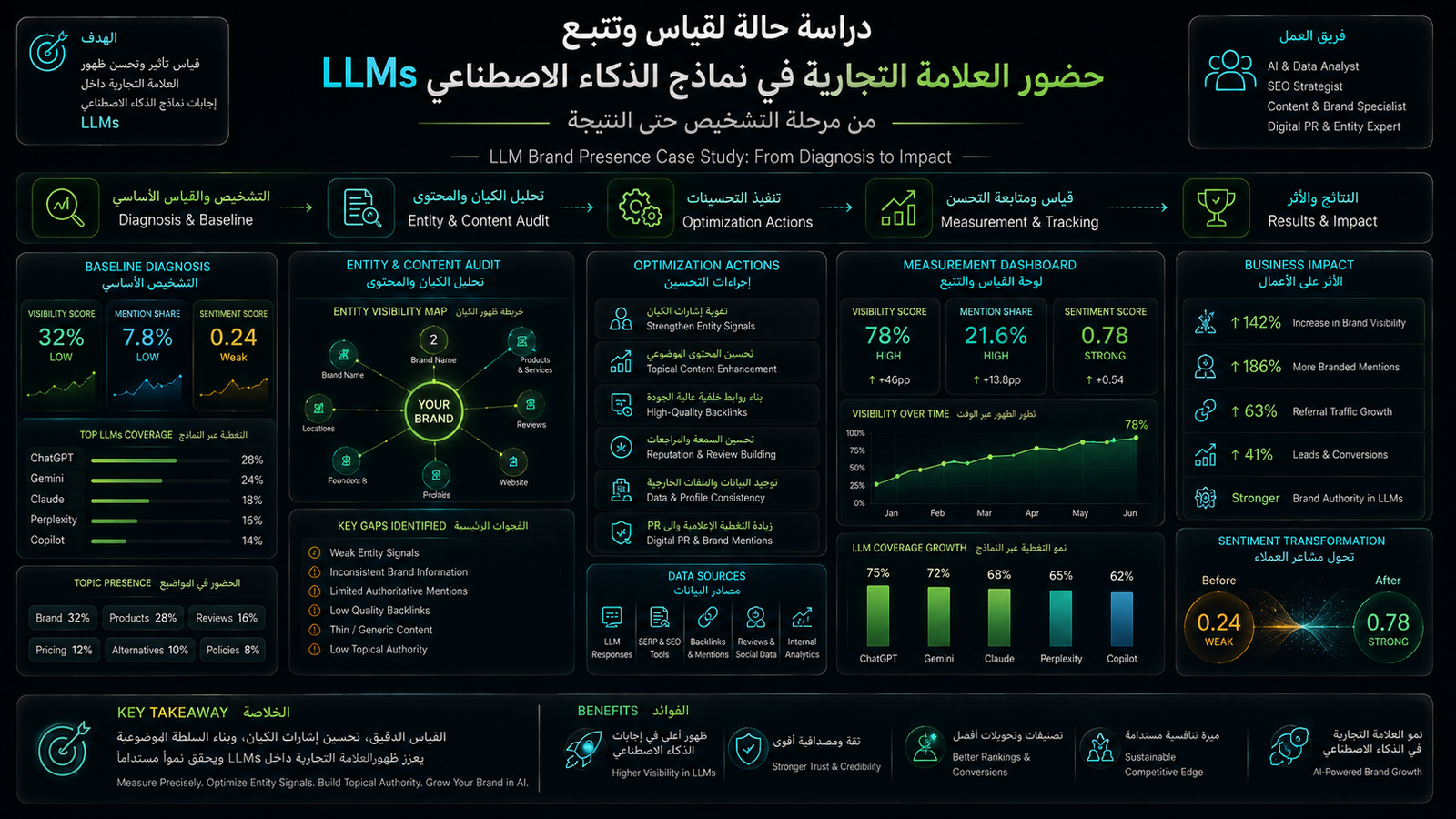
Measurement must cross the same path. Rankings and impressions show discovery, but qualified inquiries, sales conversations, and pipeline show commercial value. AI visibility requires an additional, controlled monitoring process: repeat a defined set of prompts, record whether and how the brand appears, identify cited sources and competitors, and compare the observations over time. This is less convenient than a single visibility score, but it is much more useful.
SEO, AEO, GEO, and AIO: distinct jobs inside one system
Search engine optimization
SEO is the foundation that allows the right page to be crawled, indexed, interpreted, and ranked for a relevant query. It includes technical architecture, page performance, mobile experience, indexation controls, information architecture, keyword and intent research, on-page optimization, internal linking, content quality, and legitimate external authority. If a procurement manager in Riyadh searches for an SEO consultant, or an ecommerce operator in Dubai searches for technical SEO support, SEO helps the appropriate page become a viable candidate.
Reducing SEO to inserting keywords misses the operating problem. A page can be exceptionally written and still fail because it is orphaned, duplicated, blocked, slow, or mapped to the wrong intent. A technically perfect page can also fail because it says nothing distinctive and gives the buyer no reason to trust the provider. Sustainable performance comes from alignment between user purpose, page function, technical access, evidence, and reputation.
Answer engine optimization
AEO focuses on making answers direct and structurally clear. A page should define a concept before expanding it, state the result of a comparison before discussing nuances, place steps in a sensible order, and use tables only when the reader is comparing multiple dimensions. Headings should represent real questions or decisions, not decorative keyword variations.
This does not mean adding the same ten frequently asked questions to every article. Repeated FAQs create little value and can duplicate text across the site. A useful question closes a gap that remains after the main content. Its answer is specific to the page, states relevant conditions, and avoids replacing professional diagnosis with an absolute claim. AEO is therefore an editorial discipline as much as a formatting one.
Generative engine optimization
GEO addresses the likelihood that content can be discovered, understood, and potentially used within generative answers. No field, file, or schema type guarantees citation. What a company can improve is the quality of the source it publishes: clear definitions, scoped claims, inspectable evidence, firsthand experience, accurate entity references, dates, limitations, and technically accessible pages.
A citable passage does more than declare that a service is important. It explains what the service means, when it applies, how it works, what inputs it requires, what outputs to expect, what can be measured, and what cannot be promised. It separates observation from opinion. When it cites a statistic, it gives the market and period. When it shares an outcome, it describes the circumstances rather than turning one project into a universal law.
Artificial intelligence optimization
AIO is used inconsistently across the industry. Here it means improving how a brand and its knowledge are represented across AI-assisted discovery, rather than optimizing a single article. The scope includes consistent names and descriptions, explicit relationships between people, organizations, services and locations, authoritative reference pages, corroborating external mentions, and monitoring how systems describe the brand.
This is partly a governance task. If the website uses three names for one service, professional profiles describe a different specialty, and articles attribute work to an undefined “SEO Team,” the entity becomes harder to interpret. Consistent, verifiable information does not guarantee inclusion in an answer, but it gives search and AI systems a cleaner body of evidence from which to reason.
Why Gulf search behavior requires a regional strategy, not a template
The Gulf is not one homogeneous search market. Arabic is shared across much of the audience, but vocabulary, sector mix, competition, digital maturity, and buyer expectations vary. Saudi searches may combine Arabic commercial terms with the English acronym SEO. In the UAE, Qatar, and Bahrain, decision-making teams often operate across Arabic and English. In Kuwait and Oman, a smaller search volume can still represent valuable demand where local understanding and trust are decisive.
The same buyer may move between languages during one purchase. A founder may discover an issue in Arabic, compare technical providers in English, and check an Arabic profile before making contact. An international marketing director may search in English while the customers whose behavior matters use Arabic. The two language versions must therefore share factual consistency without becoming literal translations.
Sector differences are just as important. An ecommerce store needs category, product, platform, and revenue analysis. A clinic needs local discovery, compliant claims, and appointment quality. A B2B company with a six-month sales cycle needs account-level demand and credible expertise. A software company needs use-case pages, integrations, comparison content, and trial or demo measurement. A generic regional article cannot substitute for these distinct decision environments.
Localization should affect examples, terminology, objections, and the path to conversion. It should not be a city or country name inserted into an otherwise identical page. If the team cannot add real local value, one strong Gulf guide with clearly labeled country considerations is preferable to six thin country pages competing with each other.
Build a demand map before building an editorial calendar
Large content programs often start with a spreadsheet of titles. That encourages production before strategy. A demand map starts with the buyer and connects market, language, intent, page type, and business outcome. Segment the audience by country, industry, company maturity, and role. Then collect the questions and queries that occur as the buyer recognizes a problem, investigates solutions, compares approaches, and selects a provider.
Problem-aware searches ask why traffic fell, why a store is not indexed, or why a company is absent from AI answers. Solution-aware searches ask what GEO is or how technical SEO works. Evaluation searches compare a freelancer with an agency, SEO with paid search, or Salla with Zid. Decision searches add price, consultant, company, audit, proposal, timeline, or case study. Each group expects a different page and a different level of evidence.
Assign one primary page to each meaningful intent cluster. If three articles target the same commercial query with minor title changes, the site may divide links, engagement, and relevance across competing URLs. Decide whether to retain, update, merge, redirect, or create before commissioning a new page. A supporting article may reinforce a service page, but it should not reproduce the entire offer.
Useful demand-map fields include the query or question, country, language, buyer stage, page type, current URL, primary service, conversion action, evidence required, source owner, and review date. Add estimated commercial value and implementation effort. This turns the map into a prioritization tool rather than a keyword archive.
Information architecture that supports discovery and decisions
A strong site makes the relationship between services, topics, platforms, industries, and markets intelligible. The AI visibility service page should explain the offer, process, deliverables, suitability, and boundaries. Articles can then answer detailed questions about measurement, costs, provider selection, content design, or the relationship between GEO and SEO. Case studies demonstrate execution where evidence is available, while author and organization pages establish responsibility.
Use stable, descriptive URLs and unique titles. Internal links should describe why the destination is relevant. “Review the full SEO audit service” is more informative than “click here,” but repeating one exact anchor unnaturally across dozens of pages is unnecessary. Context around the link helps both readers and systems understand the relationship.
Every long article should provide a sensible next step. A technical section can link to the technical SEO service. A discussion of diagnosis can point to the full SEO audit. A reader trying to improve inclusion in generative discovery can move to the AI visibility and GEO service. These are useful transitions when they answer a need created by the surrounding content.
Review internal architecture periodically. Find orphan pages, broken links, excessive links to low-value URLs, and old URLs that remain referenced after a merge. A content update that removes a key internal link can affect discovery. Architecture is an active system, not a task completed at launch.
Technical foundations that content cannot repair
Before expanding publication, verify that search engines can access the intended pages and are not spending attention on unwanted duplicates. Review robots directives, XML sitemaps, HTTP statuses, redirect chains, error pages, parameter URLs, pagination, filters, and alternate language relationships. Canonical and hreflang rules should follow a documented site policy; they should not be filled manually without understanding the generated defaults.
Pages need a stable mobile experience, efficient media, a clear primary heading, logical subheadings, meaningful titles and descriptions, and usable navigation. Performance metrics are diagnostic signals, not the purpose of the page. The purpose is a fast, stable experience in which users can read, compare, and act without friction.
Structured data can clarify visible information. BlogPosting or Article can identify the headline, image, author, and publication or modification dates. Person and Organization can support entity references where the facts are real and displayed. BreadcrumbList can describe hierarchy. Structured data should never invent reviews, credentials, prices, or FAQs that the user cannot see. If the CMS FAQ component generates markup, a second schema block in an HTML widget may create duplication.
Monitor Search Console and indexation after releases. A sudden performance change may come from a noindex directive, a changed path, a failed language annotation, or removed internal links rather than an editorial problem. A publication checklist should verify the public URL, status, indexability, mobile layout, links, images, language, structured data, and analytics events.
How to produce content that ranks, answers, and earns citations
Give every page a precise editorial promise. What should the reader understand or decide by the end? Deliver the short answer early, then explain conditions and implications. A direct answer respects the reader; detail protects the answer from becoming misleading.
Build each section around one question and one function. A definition section defines. A comparison section provides criteria and trade-offs. An implementation section assigns steps and responsibilities. A measurement section establishes a baseline and indicators. If two sections do the same job, merge them. If one paragraph carries several unrelated arguments, split or reorder it.
Write self-contained knowledge units. Define the entity or concept explicitly. Scope statistics by location and date. Identify the source of factual claims. Describe the context of case evidence. Label professional judgment as judgment. This improves editorial integrity and makes passages easier to quote without stripping away essential meaning.
Use formats because the decision requires them. Tables are valuable for multi-factor comparisons. Ordered lists fit processes. Checklists help execution. Continuous prose is better for reasoning and nuance. Turning every sentence into a bullet may look scannable but can destroy the argument that makes the article useful.
Demonstrate expertise through decision detail. “Improve the content” is weak. Explain the evidence that triggers an update: intent in the results has changed, qualified queries declined, new objections emerged, sources became outdated, or another URL began competing for the same demand. “Add schema” is weak. Identify the eligible type, match fields to visible information, and test the implementation.
Editing is not optional. Search for repeated phrases and repeated conclusions. Challenge unsupported claims. Check whether every heading is answered. Remove internal labels such as “SEO section,” “CTA conclusion,” or “FAQ block” from the reader-facing copy. Read once as a business owner unfamiliar with the jargon and once as a specialist looking for accuracy. The article must serve both.
Topic authority, entities, and independent corroboration
Topical authority is not created by repeating a head term across many URLs. It grows when a site covers the connected decisions around a service and makes the relationships explicit. An AI visibility service can be supported by distinct resources on auditing, brand visibility measurement, entity clarity, citable content, provider selection, and reporting. Each resource should own an identifiable question and link back for a reason.
Entities are distinguishable people, organizations, services, products, and places. To help systems connect Mohamed Yahia with specific expertise and markets, the site needs a substantive author page, consistent naming, relevant professional profiles, accurately attributed articles, and verifiable work. A keyword-heavy biography cannot replace that network of evidence.
Apply the same discipline to service entities. GEO, AI visibility, AI search optimization, and related terms overlap. Define the chosen service clearly, explain synonyms and boundaries, and use the name consistently. Natural variants can appear in context without presenting the same offer as several disconnected services.
Independent signals add corroboration that a company cannot create solely on its own domain. Relevant interviews, original contributions, professional directories with real review standards, collaborative research, and authentic reviews can strengthen understanding. The objective is not a link at any cost. It is a wider set of trustworthy sources that describe the brand and its expertise consistently.
Maintain an entity reference sheet with Arabic and English names, approved descriptions, services, markets, people, canonical reference pages, external profiles, and facts that require scheduled updates. This small governance tool prevents contradictions across content, design, public relations, and sales material.
Country priorities across the Gulf
Saudi Arabia can offer broad demand alongside intense competition. Prioritize commercially valuable services and sectors instead of publishing a page for every variation. Ecommerce content may require meaningful coverage of Salla and Zid, while enterprise work needs procurement, reporting, and stakeholder considerations. Use local examples only where they are true and documented.
The UAE frequently requires equal-quality Arabic and English experiences. A multinational decision maker may evaluate the English offer while the target customer searches in Arabic. Keep facts, prices, processes, and brand claims synchronized while adapting vocabulary and argument order. Distinguish local discovery for physical services from international visibility for companies using the UAE as a regional base.
Kuwait, Qatar, Bahrain, and Oman may show lower volumes for some phrases, but a small group of high-intent searches can be commercially significant. A few deep service and decision pages can outperform a large generic library. Clarify remote delivery, communication, deliverables, and market experience. Avoid empty local pages that exist only to carry a country name.
Jordan and Iraq can be valuable parts of a broader Arabic strategy, but they should not be collapsed into a Gulf message where market conditions differ. Let query data, operational ability, customer evidence, and business priority determine the segmentation.
Report each market separately. Compare impressions, qualified visits, conversions, and lead quality. A page may rank in one country but attract requests outside the service scope. Ranking is not a successful outcome when the resulting demand is unusable.
A practical 90-day implementation plan
During days 1 to 30, establish the baseline. Complete technical and indexation reviews. Inventory URLs, queries, backlinks, conversions, language relationships, and current content. Classify every relevant page as retain, improve, merge, redirect, or remove. Build a prompt set for important informational, comparison, and provider questions across the target countries and languages, then record current brand mentions, descriptions, competitors, and sources.
Select no more than three initial commercial opportunities. Define the primary page, supporting assets, intended action, and qualified-lead criteria for each. Agree on ownership across marketing, development, subject-matter review, design, and sales. Without ownership, the best roadmap becomes a queue of unimplemented recommendations.
During days 31 to 60, remove high-impact technical barriers and rebuild the priority service pages. Make the offer, fit, process, deliverables, evidence, and next step explicit. Update existing articles with history and links before creating competing alternatives. Strengthen author and organization information, and ensure modification dates represent genuine review.
Publish a small number of high-value assets: a decision comparison, implementation guide, documented case study, original dataset, or useful tool. Link each asset into the architecture and distribute it through channels used by the audience. Verify indexation, mobile rendering, analytics, and links after release.
During days 61 to 90, compare results with the baseline. Review emerging queries, pages gaining impressions without clicks, routes into service pages, conversions, and sales objections. Repeat the AI prompt set under the same protocol. Record changes in mentions, descriptions, citations, and competitors.
Expand only where the evidence supports expansion. If an industry guide performs well, build another with actual industry research rather than substituting a sector name. If a page stalls, reassess intent, offer, trust, and architecture before adding words. By day 90, the primary deliverable should be a repeatable learning system.
Measurement that connects visibility with business value
Organize reporting into four layers. Discovery includes indexation health, impressions, relevant query coverage, and carefully interpreted ranking distributions. Engagement includes clicks, click-through rate, landing-page behavior, and movement to decision pages. Conversion includes forms, calls, bookings, trials, purchases, or proposals. Quality includes qualified-lead rate, pipeline value, sales-cycle movement, and revenue where attribution is defensible.
AI and answer visibility require a controlled observation method. Choose prompts covering definitions, comparisons, recommendations, and problem-solving for each market and language. Record date, platform, prompt, response, brand mention, prominence, description, cited sources, and named competitors. Repeat the set periodically. Do not infer a trend from one response; outputs can change with context and time.
Separate a mention from a useful representation. Appearing at the end of a long list is different from being recommended for a relevant reason. A citation to an educational article may build authority without producing an immediate referral. Combine these observations with web analytics, CRM information, and the simple sales question, “How did you hear about us?”
Executive reporting should answer four questions: what changed, why the team believes it changed, what business effect followed, and what action comes next. State data limitations, especially where AI platforms provide incomplete referral or citation information. Honest uncertainty is more useful than a precise but invented visibility score.
Common failures that undermine search and AI visibility
The first failure is mass-producing pages from one template and changing the title, service, or country. The resulting library creates internal competition and offers little reason to trust any one page. The second is using length as a proxy for expertise. Four thousand words of repeated generalities are less useful than a focused page with evidence and decisions.
The third is treating GEO as a technical shortcut. Unsupported schema, a fashionable file, or a list of prompts cannot compensate for inaccessible pages, weak information, or no independent reputation. The fourth is duplicating FAQs in the article body, the CMS FAQ component, and an HTML widget. This wastes reader attention and may duplicate markup.
The fifth is literal translation. Arabic and English readers may use different terminology and evaluate risk differently. Each version must be editorially complete. The sixth is reusing one automated excerpt below every title. That text should tell this article's reader exactly why the page matters.
The seventh is promising guaranteed rankings or guaranteed inclusion in ChatGPT or AI Overviews. A professional controls research, execution, monitoring, and communication, not third-party algorithms. The eighth is presenting estimates as proven outcomes or publishing fabricated case evidence. Short-term persuasion is not worth long-term loss of trust.
Choosing scope, budget, and specialist support
Project cost depends on site size, technical condition, languages, markets, competition, required assets, and internal resources. Compare proposals by scope and accountability, not price alone. One price may cover a generic report, while another includes research, implementation, subject review, content, measurement, and iteration. Ask for activities, outputs, owners, dependencies, and exclusions.
Separate foundation from growth. Foundation includes auditing, demand mapping, baseline measurement, priority fixes, entity cleanup, and core-page reconstruction. Growth includes new assets, evidence development, external corroboration, iterative optimization, and ongoing visibility monitoring. This protects the content budget from being spent before structural barriers are removed.
Define acceptance criteria. A keyword map must connect intent to a URL and market. An audit must show evidence, impact, effort, and priority. An article must pass originality, source, intent, link, and mobile-quality checks, not merely a word counter. A dashboard must enable decisions rather than display decorative charts.
Internal teams can perform much of the work when development, editing, analytics, and decision authority are available. Specialist support becomes valuable when indexation is unclear, multiple languages and countries overlap, pages compete internally, lead quality is poor, or AI visibility is being discussed without a baseline.
Evaluate a specialist by the quality of diagnosis. Ask what will be examined, how priorities will be chosen, who implements, what can be measured, and what cannot be guaranteed. A full SEO audit may be the right starting point when the problem is unclear. SEO consulting may suit a capable internal team that needs a roadmap. A focused AI search optimization service may fit a company with sound SEO foundations and a specific generative-discovery objective.
Conclusion: build a discovery and trust system, not an acronym campaign
A company does not win by mentioning SEO, GEO, AEO, and AIO more often than its competitors. It wins by publishing accessible pages that answer real questions, state useful evidence, connect information to identifiable experts and organizations, guide readers toward appropriate decisions, and improve through measurement.
Start with the market, buyer, intent, and commercial outcome. Repair technical access. Organize pages and entities. Create sources worth reading and citing. Earn independent corroboration. Measure discovery, representation, conversion, and lead quality. In Gulf markets, add serious language and country localization rather than token place names.
The result is not a promise of permanent rankings or automatic AI citations. It is a compounding ability to appear when a buyer asks, persuade when the buyer visits, and learn which investment should follow. That is the practical value of integrating SEO, AEO, GEO, and AIO into one accountable growth strategy.
Frequently Asked Questions
Answers to the most common questions about this topic.
01 Does GEO replace SEO?
No. Generative visibility still depends on technical access, useful content, authority, and reputation. GEO adds emphasis on clear knowledge, evidence, entities, and citable passages.
02 What is the practical difference between AEO and GEO?
AEO structures a direct answer to a question. GEO improves the wider source so that its claims, context, and evidence are useful within a generative response.
03 Is there special schema for AI visibility?
No schema type guarantees inclusion in AI answers. Use supported structured data that accurately represents visible content, such as Article, Organization, and Person.
04 How long does the strategy take to produce results?
Timing depends on site condition, competition, scope, and implementation. Technical and indexation signals can change within weeks, while authority and qualified demand generally require sustained work.
05 Should a company create a page for every Gulf country?
Only where distinct demand and genuine local value exist. Near-identical location pages can create duplication and internal competition.
06 How can a brand measure visibility in AI assistants?
Test a stable prompt set periodically, record mentions, descriptions, sources, and competitors, and connect observations with analytics and customer information where possible.
07 Is a 4,000-word article always better?
No. Length is not a quality or ranking guarantee. Long-form content is valuable only when the subject needs the depth and every section contributes something distinct.
08 What should a multi-market company do first?
Establish a technical and commercial baseline, map demand by country, language, intent, and URL, then prioritize a small number of valuable opportunities.